What Are Enchantments in Slay the Spire 2?
Enchantments represent a sophisticated layer of card customization in the sequel, acting as permanent modifiers that attach to specific cards in your deck. Unlike basic upgrades that simply improve baseline stats like damage or block, these effects fundamentally alter how a card functions, often introducing powerful benefits alongside significant drawbacks. Once you apply an Enchantment, it remains on that card for the duration of your run, meaning you must weigh the long-term consequences before committing to one. This permanence transforms a simple card choice into a strategic pillar of your entire run.
You can spot an enchanted card by the distinct icon displayed on its face. Additionally, many of these modifiers add descriptive text in a unique purple typeface, allowing players to quickly identify modified cards during the heat of battle. Because these changes are lasting, they function as a core component of your deck's identity rather than a temporary boost. Unlike potions or temporary buffs that expire after a single encounter, whatever modifications you apply will stay with that card until you face the final boss. This makes the decision to enchant a card a meaningful commitment that can either define your victory or accelerate your defeat.
Standard upgrades in Slay the Spire 2 generally provide straightforward buffs, such as increasing damage or lowering the energy cost of a card. Enchantments, however, are designed to be "build-around" mechanics. They offer much more dramatic power spikes but require the player to manage specific trade-offs. This shift in design means that an enchanted card is rarely a direct upgrade; instead, it is a specialized tool that requires a deck capable of handling its unique requirements.
What Trade-Offs Do Enchantments Introduce?
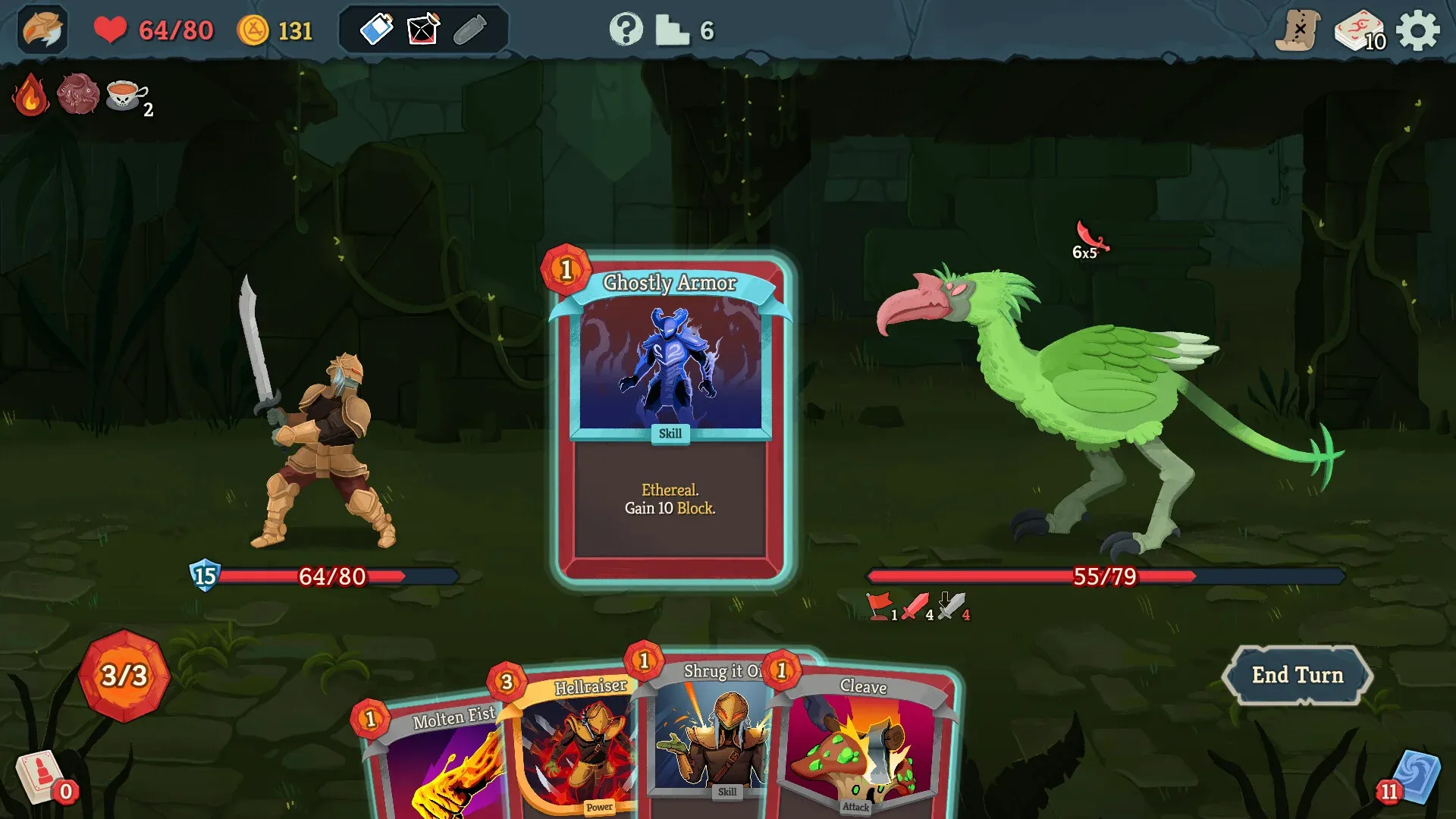
The defining characteristic of Enchantments is the inherent balance between power and sacrifice. Every benefit provided by these modifiers is paired with a specific penalty, ensuring that players must think critically about their deck's sustainability. For instance, the "Corrupted" modifier is a prime example of this "high risk, high reward" philosophy. While it boosts an attack card's damage output by a massive 50%, it forces the player to lose 3 HP every time the card is played.
Players must be extremely cautious when enchanting cards that appear frequently in their rotation. If you attach an HP-draining modifier to a low-cost card you play multiple times per encounter, the cumulative health loss can be devastating. Playing such a card four times in a single boss fight would result in 12 damage taken, which could easily be the difference between victory and defeat. Always calculate the frequency of a card's draw cycle against your current health regeneration capabilities before finalizing an Enchantment.
This design philosophy ensures that players cannot simply power up their deck without considering the longevity of their character over multiple acts. Other trade-offs might include increased energy costs or reductions in maximum health. The key to success is recognizing which penalties your current build can absorb. If your deck lacks consistent healing, an HP-costing modifier might be a death sentence, whereas a deck with high sustain could use that same modifier to end fights significantly faster.
Where Are Enchantments Found in Slay the Spire 2?
Currently, the primary way to acquire Enchantments is through rare Event nodes encountered while traversing the map. These encounters are not guaranteed in every run, meaning players must actively hunt for them by prioritizing "Question Mark" nodes if they wish to modify their deck in this way. Mega Crit has indicated that while Events are the most common source during the early access phase, other methods of obtaining Enchantments are present in the game, even if they are less frequent or yet to be fully detailed.
When planning your route through an Act, consider your deck's ability to handle potential trade-offs. If your build features significant healing or high Max HP, taking a path heavy on Event nodes becomes much more attractive. Conversely, if your deck is struggling to survive, seeking out Enchantments might be too risky. Success in Slay the Spire 2 often comes down to recognizing when your current build can afford the price of admission for these powerful card modifiers.
Because these sources are limited, it is important to have a target card in mind before you even step into an Event node. Having a high-impact attack or a crucial skill ready for enchantment can maximize the value of these rare encounters. As the game evolves through its development cycle, it is expected that more ways to interact with this mechanic will be introduced, perhaps through elite rewards or specific shop items, but for now, the map's hidden events remain your best bet.
How Do Ancients Connect to Enchantments?
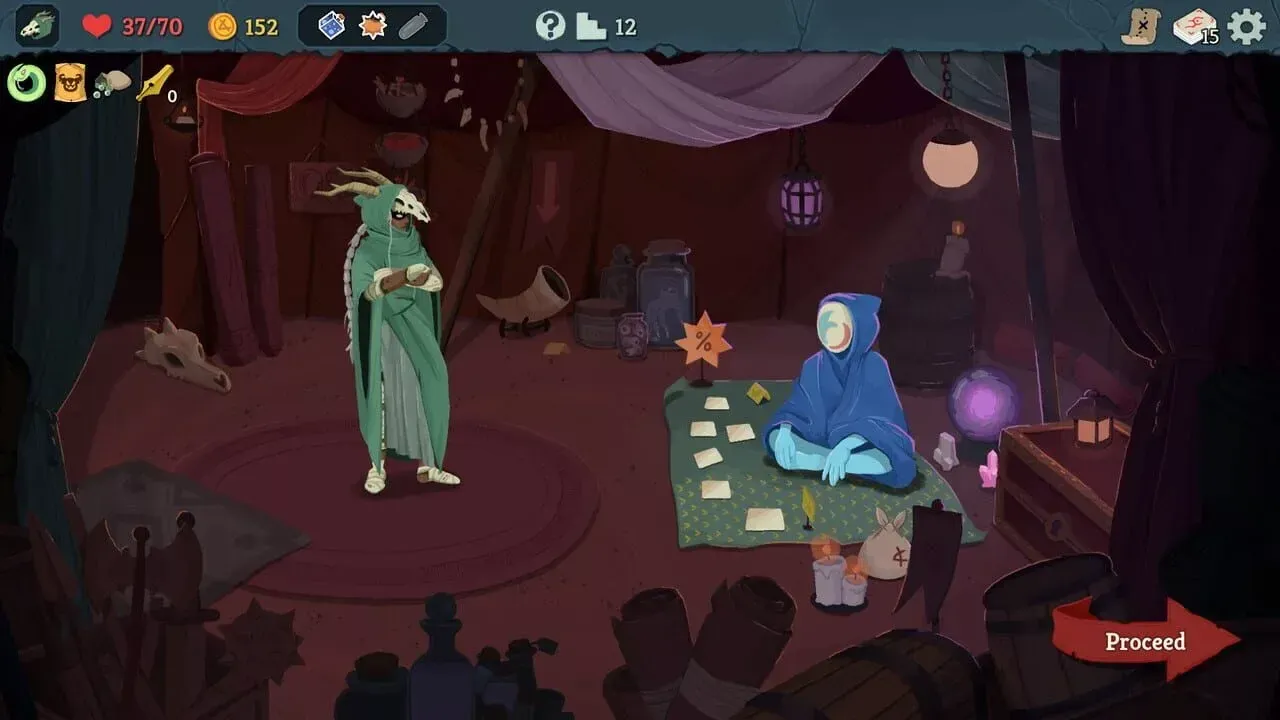
Ancients serve as the foundational NPCs of each Act, providing essential blessings that can synergize perfectly with Enchantments. At the start of Act 1, players will encounter Meow, whose offerings will be familiar to fans of the original game. However, as you progress into Act 2 and beyond, you will meet new Ancients who provide a fresh variety of boons. These can range from shortened map routes and bonus relics to direct increases in damage output or utility.
These blessings effectively dictate the early trajectory of your run. By choosing a blessing that provides extra sustain or energy, you can create a safety net that allows you to take on more punishing Enchantments later. Understanding the relationship between an Ancient's blessing and the potential costs of Enchantments is vital for high-level play. For example, a blessing that increases your total health pool or provides a healing relic might make an HP-costing Enchantment much more viable, allowing you to lean into aggressive strategies that would otherwise be unsustainable.
Since Ancients are met at the very beginning of an Act, they provide the perfect opportunity to plan your build around the possibility of finding an Enchantment. If you choose a blessing that favors a high-energy playstyle, you are essentially preparing your deck to handle an Enchantment that might increase a card's cost in exchange for a massive effect. This interconnectedness between different game systems is what allows for the deep, strategic complexity that the Slay the Spire series is known for.
How Should You Build Around Enchantments?
Success with Enchantments requires a proactive deck-building mindset. Rather than treating them as simple power-ups, you should view them as central mechanics to build around. If you take an Enchantment that costs HP, your priority should shift toward obtaining healing relics or cards that provide sustain. It is also wise to apply HP-costing modifiers to expensive cards that you only play once or twice per fight, rather than cheap cards that cycle quickly through your hand and drain your life bar.
For modifiers that increase Energy costs, ensure your deck has sufficient energy generation through relics or specific card synergies to prevent your turn economy from collapsing. These Enchantments are best suited for cards that provide enough immediate value to justify the extra investment. Max HP reduction Enchantments are perhaps the most dangerous, especially on higher Ascension levels where enemy damage is tuned to be more lethal. These should only be selected if the offensive boost is significant enough to end battles before the reduced health pool becomes a liability.
Since these choices are irreversible, testing different combinations on lower difficulty settings is recommended before attempting them during a serious climb. You should always consider the "worst-case scenario" for an enchanted card. If drawing that card when you are low on health or energy would prevent you from defending yourself, it might be better to leave the card in its base form. A well-built deck treats the Enchantment's cost as a manageable tax rather than a crippling burden.
What's the Best Strategy for Using Enchantments?
The most effective strategy for utilizing Enchantments is to align their specific costs with