
Which Character Should You Pick First?
The roster available in Slay the Spire 2 features a mix of veterans from the original game alongside two brand-new playable options. Access to this full lineup is not immediate; the Epoch progression system restricts availability until players successfully complete specific acts and overcome major bosses. Because of these restrictions, choosing wisely for your initial attempts is critical.
For your debut run, The Ironclad is the recommended choice. He possesses an 80 HP pool, which provides a larger margin for error compared to other classes. Additionally, his unique Burning Blood relic automatically restores 6 HP following every combat encounter. This passive healing effectively mitigates mechanical errors that would otherwise result in an instant loss on lower-health characters. While The Silent offers immense power potential, she demands early commitment to a narrow playstyle. Similarly, The Defect starts slowly and requires careful card management that develops over several acts. Mastering the Ironclad’s core identity first allows you to learn the fundamental mechanics before attempting more complex builds. Once comfortable, you can unlock and experiment with the other options available through the progression system.

How Should You Build Your Deck?
New players frequently err by entering a run with a rigid strategy and forcing cards to fit that predetermined plan. Since the game does not guarantee specific card rewards, chasing a fixed combo often results in holding onto pieces that never synergize effectively. Instead, maintain a small and focused deck composition throughout the early stages.
Target a total deck size between 20 and 25 cards by the time you face the Act 1 boss. Adding unnecessary cards dilutes your draw pool, meaning your strongest abilities appear less frequently during fights. If a reward card does not address a current weakness or improve your established direction, declining it is the correct decision. Before pursuing a win condition, ensure you have a reliable baseline consisting of consistent damage output, steady block generation, and at least one method to handle high-threat enemies. Specialization is only viable once this foundation is secure. Bosses such as the Waterfall Giant punish one-dimensional approaches, and certain elite encounters cap damage taken per round, stalling burst-only decks. Draft cards that function independently on turn one, then layer synergies as the run progresses.
Remove Basic Cards as Early as Possible
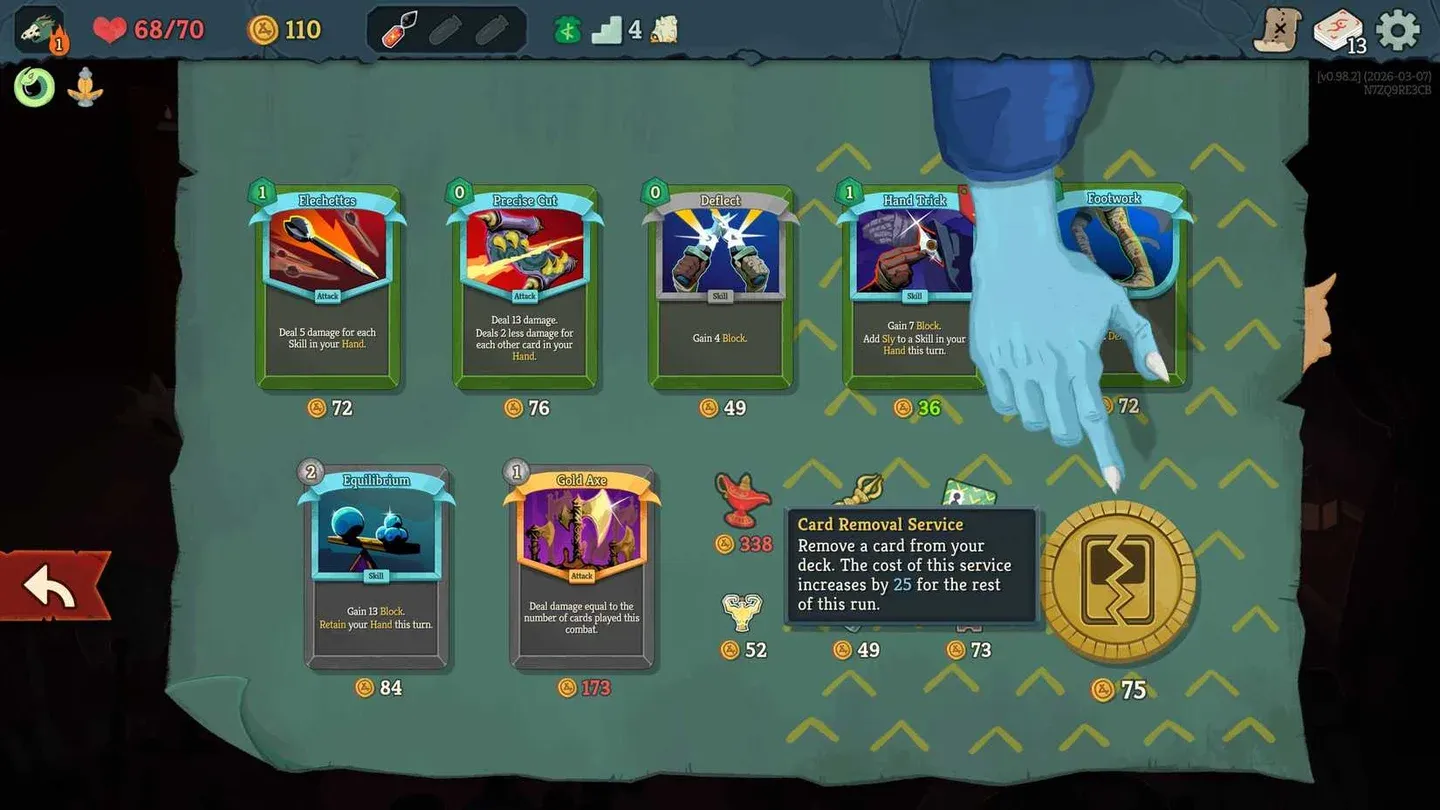
Your starting inventory of five Strikes and five Defends becomes obsolete quickly. For instance, the Ironclad’s Pommel Strike costs one energy, deals nine damage, and draws a card, offering three additional damage compared to a basic Strike at the same cost. Whenever a superior replacement exists, keeping a basic Strike or Defend wastes valuable draw opportunities. Visit the Merchant’s Card Removal Service to strip weak cards from your collection. The initial removal costs 75 Gold, increasing to 100 Gold for subsequent services. Generally prioritize removing Strikes before Defends, and utilize events offering free removal whenever the tradeoff favors your deck health.
How Do Relics Work and Why Do They Matter?
Relics provide passive bonuses that remain active across every fight for the duration of your entire run. They serve as the primary engine for accelerating run momentum, and understanding their interactions distinguishes players who reach Act 3 from those who stall in Act 2. The main method for acquiring relics is defeating Elite enemies. Each elite guarantees a relic drop along with a card reward, gold, and potentially a potion.
Several specific relics warrant attention immediately. Orichalcum stabilizes turns where block generation fails, while Vajra significantly amplifies multi-hit attack decks. Mummified Hand serves as a build-defining item for specific strategic archetypes. Of course, the Ironclad starter relic, Burning Blood, continues to heal 6 HP after every combat. Purchasing relics at the Merchant is often worth prioritizing over individual card purchases when gold permits. A relic compounds its value across the whole run in ways a single card rarely matches. Aiming for two to three elite defeats in Act 1 is a strong default plan. Skipping elites to conserve HP produces a weaker deck at the boss, yields fewer relics, and generates less gold for the shop. The power gains from relics accelerate your run faster than the HP saved by avoiding them.
What Should You Do at Campfires?
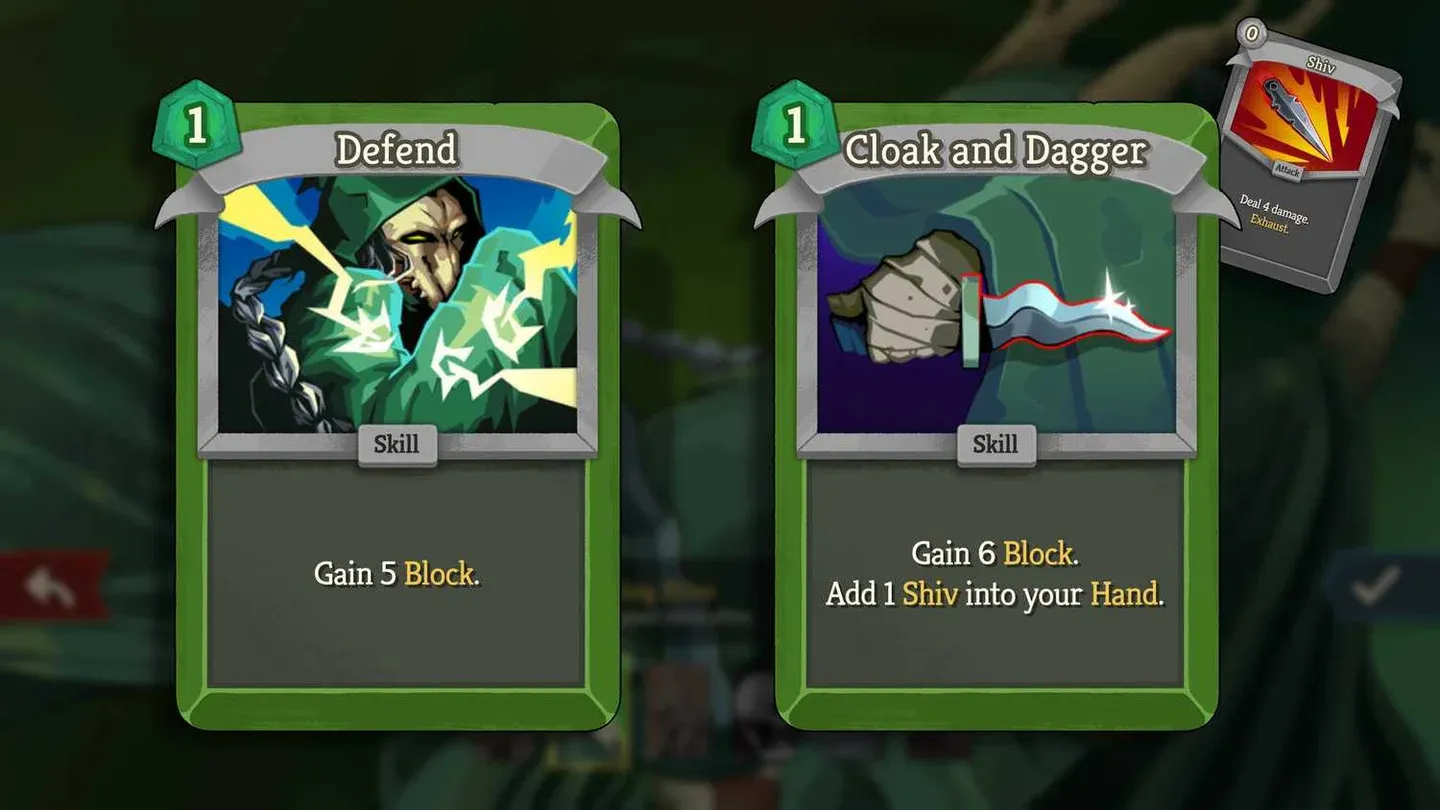
Campfire locations offer two distinct choices: rest to recover 30% of your maximum HP, or Smith to upgrade one card. In most situations, upgrading is the stronger default option. Upgraded versions deal higher damage, cost less energy, or generate additional effects that can shift the outcome of difficult boss fights. If Apotheosis appears as a card reward, it upgrades every card currently in your hand simultaneously and deserves high-priority consideration. You should aim to Smith at least twice per run through deliberate pathing toward campfire locations.
HP should be viewed as a resource rather than a score. The run ends at zero, but every point above that is available to spend for advantages elsewhere on the map. Rest sites used to Smith rather than heal often produce more overall run value than the HP restored. This is particularly true when your deck contains cards that upgrade into meaningfully stronger versions. Spending HP to gain power creates a feedback loop where your deck becomes efficient enough to survive future threats without needing constant healing. Balancing these choices determines whether you burn out early or sustain a long victory.
How Does the Map Work?
The map interface is accessible at any point during a run via the icon located at the top-right of the screen, including while NPC dialogue is active. Each icon identifies the type of encounter ahead, allowing you to scout the floor before committing. Standard enemy rooms represent core combat encounters, while Elite encounters offer high-risk, high-reward fights with relic drops. Treasure chests provide free item pickups, and Rest sites function as campfires for healing or upgrading. Merchants allow you to buy cards, relics, potions, and card removal services. Finally, Unknown rooms marked with a question mark contain random events that may offer buffs or impose costs.
Hovering over any icon type on the map legend highlights every instance of that encounter on the current floor, making route planning significantly easier before moving. Warning signs indicate Unknown rooms can net you a powerful relic or saddle you with a debuff. If your deck is already weak, visiting an unknown event is a reasonable gamble since the potential upside outweighs the risk. If your deck is strong, weigh the cost carefully. If Neow’s starting bonus provides significant gold, confirm a Merchant appears early on your chosen path before accepting it. If Neow reduces your max HP, deprioritize routes stacked with elites to minimize danger.
How to Handle Combat Effectively?
In combat, stacking block before attacking is the correct default approach when an enemy intends to deal damage that turn. Playing aggressively into an incoming attack without sufficient block accelerates HP loss and reduces the number of decisions available for the rest of the act. Each turn reads differently depending on the enemy’s declared intent, the cards in hand, and how many rest sites remain on the path. When an enemy spends its turn applying buffs or building shields rather than attacking, that is the optimal moment to push maximum damage output.
Use potions during elite fights, not boss fights. A potion spent shortening an elite encounter reduces total damage taken when entering the next room. Potions are most valuable when they shorten fights that would otherwise chip away at your HP before reaching a campfire. Saving potions for bosses often wastes their utility because you cannot carry them over to the next area anyway. By utilizing them earlier, you preserve your health pool for subsequent challenges. Always prioritize survival efficiency over raw aggression when facing multiple threats in sequence.