What Are Quest Cards in Slay the Spire 2?
Slay the Spire 2 introduces Quest Cards as a brand-new mechanical layer for players to navigate. These items occupy a card slot in your deck but are fundamentally different from standard attacks or skills because they are Unplayable. When you draw a Quest Card during combat, it provides no immediate defensive or offensive utility, effectively acting as a "dead draw" that clogs your hand. The purpose of these cards is not to help you win a specific fight, but to provide a long-term objective that spans multiple floors or even entire Acts.
Every Quest Card features a unique requirement that must be satisfied during your journey. Once you successfully meet the specified condition, the card grants a powerful reward. This creates a compelling risk-reward dynamic: players must decide if their current deck is strong enough to carry a useless card in exchange for a significant power boost later on. Because they cannot be played under any circumstances during a battle, they represent a persistent handicap that tests your ability to manage deck consistency. For those who can mitigate the disadvantage of a reduced hand size, Quest Cards offer some of the most impactful upgrades available in the game.
How Do Quest Cards Work?
The lifecycle of a Quest Card is broken down into three primary stages: acquisition, fulfillment, and reward. First, you obtain the card through specific game encounters, at which point it immediately enters your deck. Second, you must progress through the Spire while working toward the card's specific goal. Finally, once the criteria are met, the quest concludes and you receive your prize.
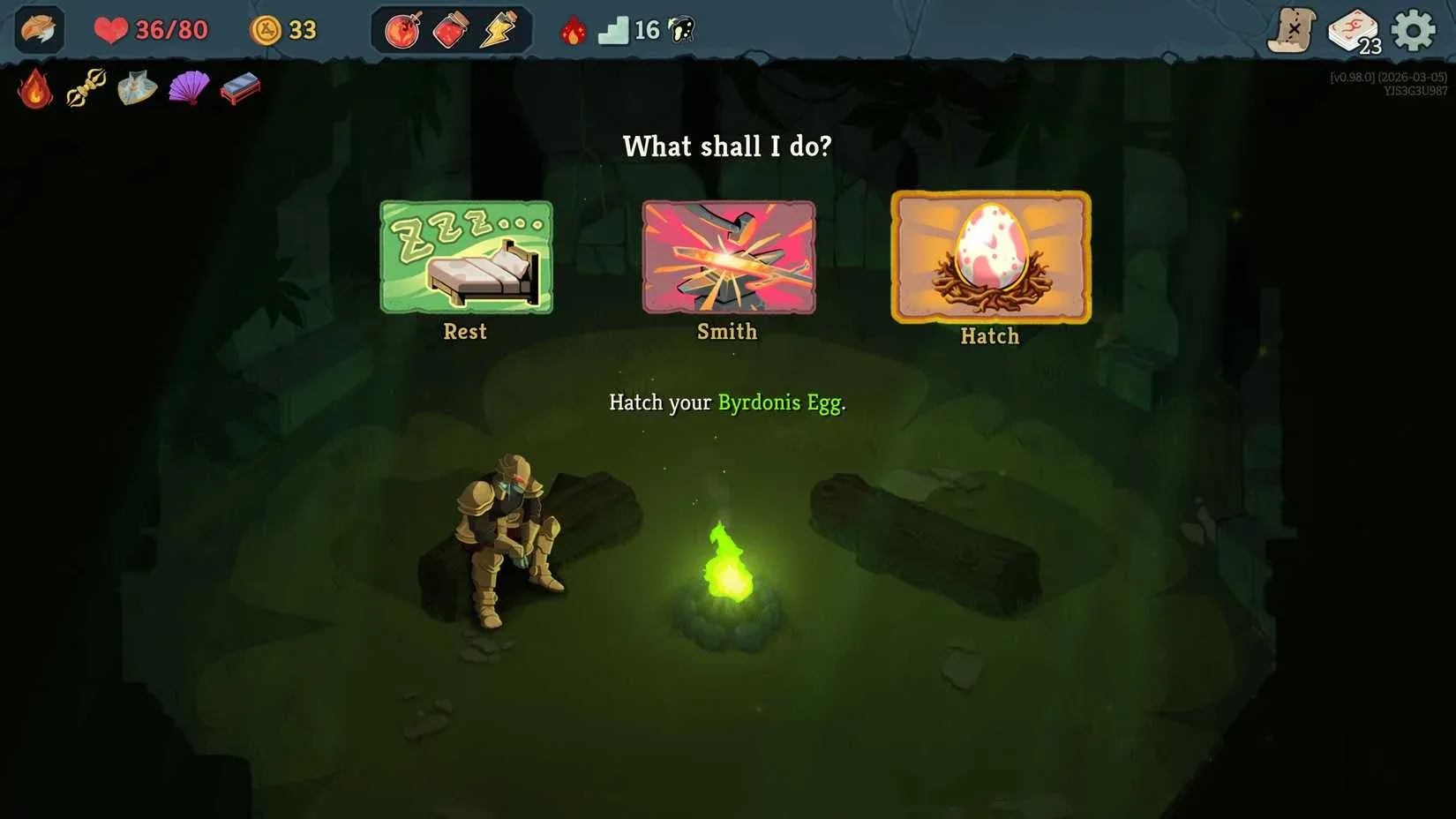
The Byrdonis Egg serves as a perfect illustration of this mechanic. The card requires the player to "hatch" it, a task that can only be performed at a Rest Site. Upon arriving at a campfire, a special interaction becomes available. Choosing to hatch the egg consumes the Quest Card and grants the Bird Swoop card, a functional combat card that stays in your deck permanently. Another high-profile example is the Spoils Map. This quest offers a massive payout of 600 Gold upon completion, providing enough capital to buy out an entire shop's inventory. While the community is still investigating whether the Spoils Map remains in the deck as a dead draw after the gold is collected, the immediate financial gain is undeniable. It is crucial to study the requirements of any Quest Card before accepting it; tasks tied to Rest Sites are generally much easier to guarantee than those that depend on specific combat outcomes or RNG-heavy events.
Where Are Quest Cards Found?
Current data from the Early Access version of Slay the Spire 2 indicates that Quest Cards are primarily discovered through Event rooms. These encounters are represented by the "?" icons scattered across the map. When you enter an Event room, you may be presented with a narrative choice that offers a Quest Card as a potential outcome. Unlike standard cards that are drafted after winning a battle, Quest Cards are tied to these unique scripted moments, making them somewhat rarer and more specialized than your typical deck additions.
It is important to remember that because the game is still in active development, the methods for obtaining these cards may expand over time. The developers may eventually introduce Quest Cards as rewards for defeating Elite enemies, loot found in Boss Chests, or even items for sale in the Shop. For now, however, players looking to experiment with this mechanic should prioritize paths that contain a high density of Event nodes. Navigating toward these unknown rooms is the most reliable way to find the Byrdonis Egg, the Spoils Map, or any other quests currently hidden within the Spire. Keeping an eye on the latest patch notes is recommended, as the availability and variety of these cards are likely to shift as the game approaches its full release.
Known Quest Cards Comparison
When evaluating Quest Cards, you must weigh the specific reward against the inherent risk of "dead draws." Adding a Quest Card to your deck means you will occasionally have one less usable card in your hand during vital turns. If you choose to carry multiple Quest Cards simultaneously, you significantly increase the chance of drawing a hand full of unplayable objectives, which can be a death sentence against high-damage enemies or bosses. Successful players must compare the long-term utility of the reward—such as the 600 Gold from a Spoils Map—against the immediate threat of losing health because they couldn't draw a block card.
Each known Quest Card offers a different type of value. The Byrdonis Egg provides a direct upgrade to your combat capabilities by transforming into the Bird Swoop card. In contrast, the Spoils Map provides economic flexibility, allowing you to remove cards, buy relics, or purchase powerful potions. The choice between these depends on your current build; a deck that already has strong cards might prefer the gold to hunt for specific relics, while a struggling deck might need the extra combat power provided by a transformation. Always consider your deck's current "draw through" rate; if you have plenty of ways to draw extra cards, the penalty of a Quest Card is much easier to swallow.
Should You Take Quest Cards?
Deciding whether to accept a Quest Card requires a careful analysis of four main factors. First is your deck size. In a large deck of 30 or more cards, the negative impact of a single unplayable card is diluted. In a lean, 10-card infinite-loop deck, a Quest Card can completely ruin your strategy. Second is the reward's actual value to your current run. While 600 Gold is impressive, it is only useful if you have shops left to visit and your health is stable enough to survive the intervening fights.
Third, you must consider the difficulty of the completion condition. Objectives that trigger at Rest Sites are extremely safe because you control when you visit them. However, if a quest requires a specific combat interaction, you may find yourself stuck with a dead draw for dozens of floors if the right situation never arises. Finally, consider your current floor depth. Picking up a Quest Card early in Act 1 gives you plenty of time to reap the benefits. Acquiring one late in Act 3 is often a mistake, as you may reach the final boss before you have a chance to complete the objective, leaving you with a handicap during the most difficult fight of the run. Generally, Quest Cards are best suited for players who have a solid defensive foundation and can afford a bit of inconsistency in exchange for a massive late-game payoff.
What Happens After Completing a Quest Card?
The resolution of a Quest Card is a topic of ongoing study among the Slay the Spire 2 community. For some cards, the completion process involves a transformation. The Byrdonis Egg is the clearest example: once you fulfill the hatching condition at a Rest Site, the egg is removed from your deck and replaced with the Bird Swoop card. This is the ideal outcome, as it removes the "dead draw" penalty and replaces it with a useful tool. It essentially functions as a delayed card reward that requires an investment of time and map positioning.
However, not all Quest Cards may behave this way. There is ongoing discussion regarding whether cards like the Spoils Map disappear entirely after their reward is granted or if they remain in your deck as permanent clutter. If a card stays in your deck after the reward is claimed, it represents a permanent tax on your draw consistency for the remainder of the run. As more Quest Cards are added during the Early Access period, the diversity of these post-completion effects will likely grow. Some might offer "Choose one of three" rewards, while others might grant permanent relics or character buffs. Understanding the long-term impact on your deck composition is vital for high-level play, as the ultimate goal is always to emerge from the quest stronger than you were when you started.